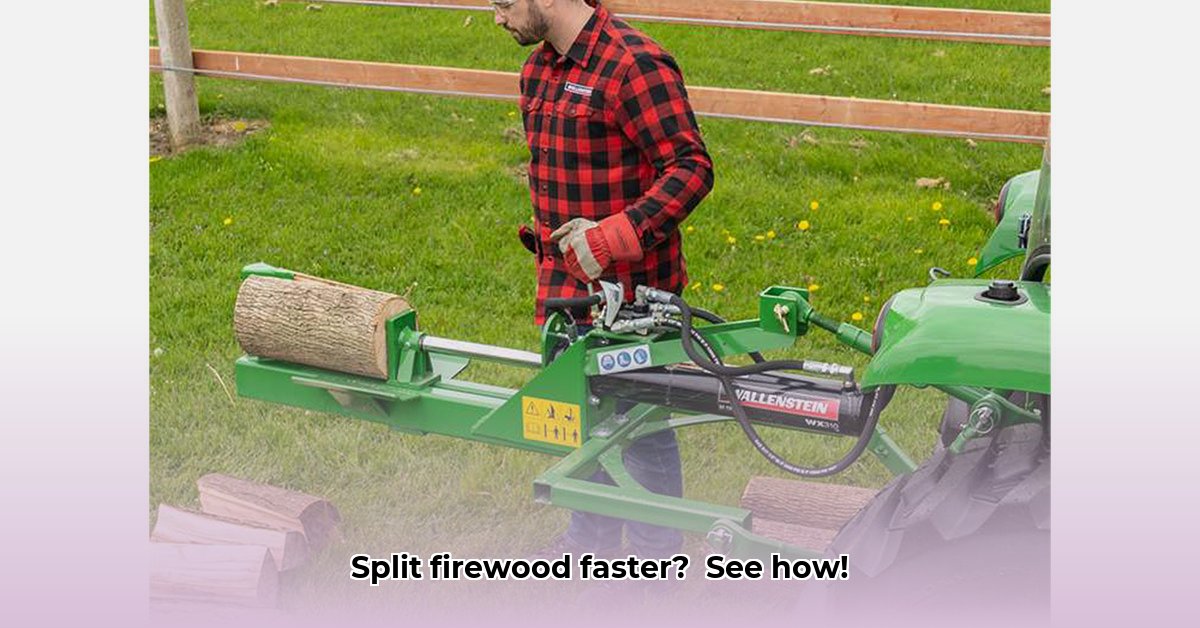
Log Splitter for Tractor Mounted: Maximize Your Firewood Production
Are you tired of backbreaking labor splitting firewood? Tractor-mounted log splitters offer a powerful and efficient solution, dramatically reducing the time and effort required to process large volumes of wood. But choosing between the two main types—3-point hitch and PTO—requires careful consideration. This comprehensive guide breaks down the key differences, helping you select the perfect splitter to match your tractor and firewood needs. We'll cover everything from choosing the right model to safe operation and maintenance, ensuring you get the most from your investment. For more options, check out the tractor supply log splitters.
3-Point Hitch vs. PTO: Which Log Splitter is Right for You?
Both 3-point hitch and PTO (Power Take-Off) log splitters offer significant advantages over standalone models, chiefly increased efficiency and power. The key difference lies in how they connect to and receive power from your tractor. A 3-point hitch splitter uses your tractor's existing hydraulic system for a simpler, direct connection. A PTO splitter, conversely, uses a separate hydraulic pump powered by the tractor's PTO shaft, offering more flexibility, especially for tractors with less robust hydraulic systems.
Here's a detailed breakdown:
| Feature | 3-Point Hitch | PTO |
|---|---|---|
| Power Source | Tractor's hydraulic system | External hydraulic pump driven by tractor's PTO |
| Installation | Simple, direct connection to the 3-point hitch | Requires PTO shaft and hydraulic line connection |
| Setup Complexity | Generally easier and quicker | Slightly more complex setup and connections |
| Hydraulic Demand | Higher demand on tractor's hydraulics | Lower demand on tractor's hydraulics; more flexible |
| Typical Cost | Usually less expensive upfront | Often more expensive initially |
| Maintenance | Simpler maintenance routine | Potentially more complex maintenance, including pump maintenance |
3-Point Hitch System: Simplicity and Speed
Pros: Simple setup and direct hydraulic power make for efficient splitting and often a lower initial price.
Cons: Requires a powerful tractor with substantial hydraulic capacity. Insufficient hydraulic flow or power will result in underperformance or potential damage to the tractor's hydraulic system.
PTO System: Flexibility and Consistent Power
Pros: Offers flexibility, ideal for tractors with less powerful hydraulic systems as it reduces strain. Provides more consistent splitting power regardless of the tractor's hydraulic capabilities.
Cons: More complex setup involving the PTO shaft and separate hydraulic lines, adding to the initial cost and maintenance complexity.
Key Factors to Consider Before Buying a Tractor-Mounted Log Splitter
Several critical factors will determine your best choice:
Tractor Compatibility: This is paramount. Verify your tractor's horsepower, hydraulic flow rate (GPM), and 3-point hitch specifications (for 3-point hitch models). A mismatch can lead to inefficiency or damage. Consult your tractor's manual. Building a safety margin between the splitter's requirements and your tractor's capabilities is recommended by experts.
Wood Volume and Log Size: Estimate your annual firewood needs and the average log size. Choose a splitter with an appropriate tonnage rating (splitting force) to avoid overloading the machine. Overestimating is better than underestimating.
Budget: Consider initial cost, maintenance, repair costs, and the time saved. A more robust splitter may be more cost-effective in the long run.
Safety Features: Look for features like automatic shutoff valves and emergency stop buttons.
Step-by-Step Guide: Safe and Efficient Operation
Always consult your log splitter's manual. These general steps, however, apply to most models:
Preparation: Level, stable surface; inspect connections; clear the area.
Connection: Connect the splitter to your tractor according to the manufacturer's instructions. Double-check all connections.
Starting and Operation: Engage the PTO (if applicable) and start your tractor. Engage the splitter's hydraulic system slowly, feeding logs carefully and avoiding sudden movements.
Maintenance: Regularly inspect hydraulic lines and lubricate moving parts as needed. Clean the work area.
Safety Precautions: Wear safety glasses, gloves, and sturdy footwear. Never reach into the splitting chamber while the machine is running. Keep bystanders at a safe distance.
Troubleshooting Common Issues
- Hydraulic Leaks: Locate the leak, inspect connections and seals. Consult your manual or a professional if needed.
- Log Jams: Never force a jammed log. Turn off the machine and use the appropriate tools to clear the jam, as outlined in the manual.
Conclusion: Choosing Wisely for Safe and Efficient Firewood Processing
Choosing the right tractor-mounted log splitter depends on your specific needs and resources. Carefully consider your tractor's capabilities, firewood needs, and budget. Remember, safety is paramount. By following these guidelines, you can efficiently and safely boost your firewood production.
Resources
(Add links to relevant manufacturers and safety information here)